The German-speaking guest who calls at midnight
Twenty past midnight, a guest phones in German to ask if the pool is heated in September. The owner is asleep and doesn't speak German. Somewhere nearby, another house is still awake and answers first.
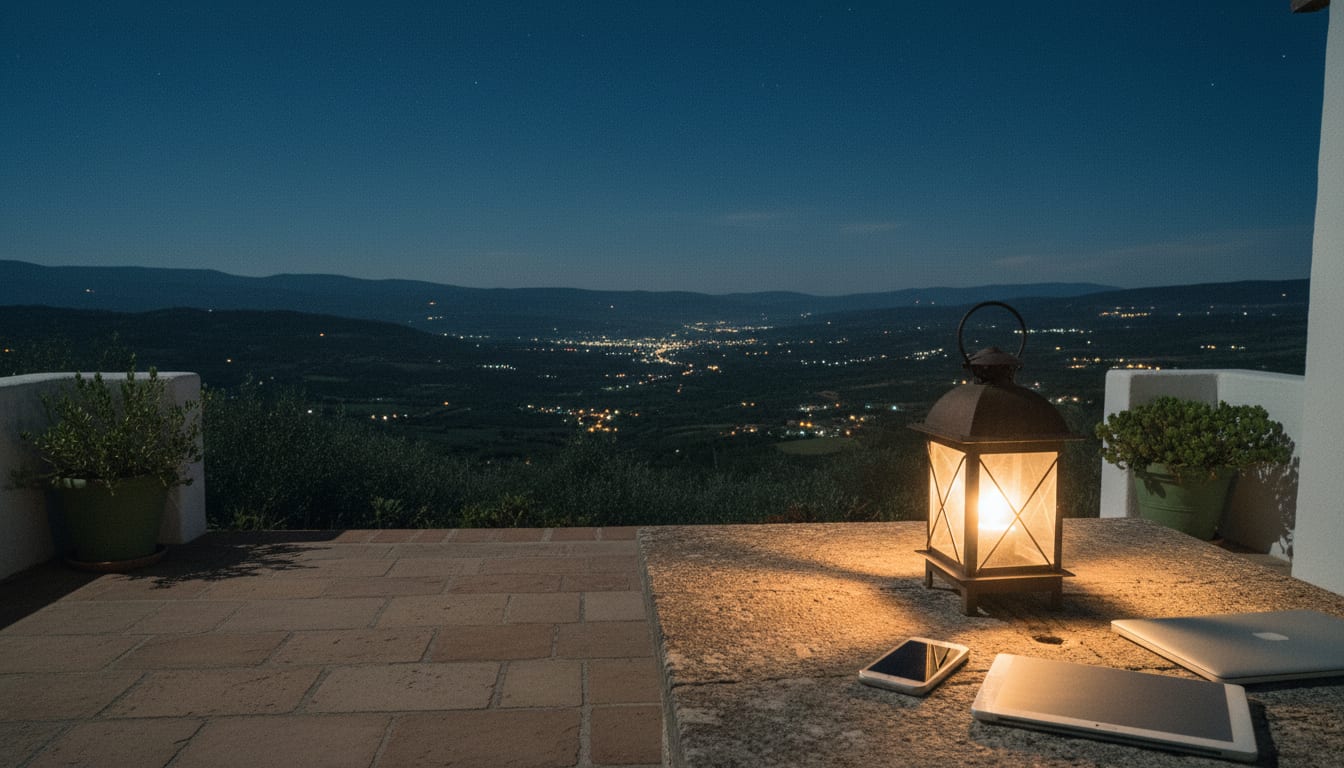
At twenty past midnight, a call comes in, in German: is the pool heated in September, and can they bring a cot for the baby. The owner of the house doesn't speak German and is, sensibly, asleep. By the time the call is returned the next morning, in Spanish-flavoured English, the family has already asked the same question of a house two streets away.
A market that answers in fewer languages than it's asked in
Most holiday lets in Spain are run by someone who speaks Spanish and enough English to get by. The guests booking them don't sort themselves so neatly. Dutch, German and French visitors are a steady share of the market, and a question asked in the guest's own language, at whatever hour they happen to be free to ask it, doesn't wait for the owner's working day.
57%of stays in Spain last three nights or fewer, so the same property fields this kind of enquiry many times a month, not once a season
Why a translated reply the next morning isn't the same
A reply that arrives eight hours later, however polite, tells the guest something they didn't ask about directly: that questions during the actual stay, the ones that come up at ten at night because the boiler's making a noise, might wait just as long. That's a harder thing to undo once a family has already decided to look elsewhere.
It isn't only the booking that's lost overnight. It's the guest's guess about what the whole stay will be like.
It matters just as much once the guest has arrived. A dishwasher that won't start, a road closed for a local fiesta, a question about the nearest doctor, none of these wait for the owner's working day either, and an answer in the guest's own language, at the hour they're actually worried about it, is the difference between a mention in a good review and a problem that quietly spoils the last night of the stay.
Beyond German: the same pattern in Dutch and French
The pattern isn't unique to German. A Dutch family asking about a wheelchair-accessible ground floor, a French couple asking whether the last stretch of the road needs a four-wheel drive, both arrive with the same expectation: an answer in their own language, at whatever hour they happened to be free to ask. A listing that only really works in English is, for a meaningful share of the market, only half-finished.
None of this is about chasing every language a guest might conceivably use. It's about the handful that actually show up in the enquiries a given property gets, season after season, and making sure none of them default to a slower, translated, next-morning reply just because the owner doesn't happen to speak it.
A guest who has to switch to a translation app to read the reply notices the extra step, even if the words come out roughly right. It reads as effort on their part rather than the property's, and that small friction, repeated across a booking and then across a stay, is exactly the kind of thing that turns into a middling review rather than a returning guest.
The German question that got answered on the spot
The question about the heated pool and the cot reached Casa del Roble by phone on a Tuesday night in August. StaySuite's assistant picked up within seconds and answered in German, because that is the language the caller used. In its first sentence it said it was an AI assistant and that the call was being recorded, as European rules have required since August 2026. It told them what the property sheet says about the pool, noted the request for a cot, and took the dates, the number of people and a phone number as a pending request. The owner saw it in the panel the next morning, with the recording and a summary, and accepted it once the nights were checked.
None of this depends on the owner ever picking up a phrasebook, and that's rather the point. The languages a property needs to answer in are decided by who actually books it, season after season, not by which ones the owner happens to have studied at school.
How this works without anyone learning German
The assistant is instructed to answer in whichever language the guest speaks, on the phone, at whatever hour the call arrives. That is an instruction in its prompt, and we have not measured it language by language, so try your guests' language in the demo. It isn't reading from a script translated once and left untouched: it answers the actual question from the property sheet, never confirms dates, and when a guest wants a person it takes their details and notes that they want to talk to your team.
- German, Dutch, French or any other language the caller uses, answered as the call arrives, not queued for the morning.
- The same property sheet behind every language, so a yes in German matches a yes in English.
- A recording, a transcript and a summary of every call waiting in your panel in the morning.
There's also a quieter benefit to answering in the guest's own language from the start: fewer misunderstandings that only surface once the stay has already begun. A dog policy explained clearly in German up front avoids the awkward conversation on the doorstep, in broken English, about why the second dog wasn't mentioned when the booking was made.
Starting without becoming a call centre
Getting to that midnight reply doesn't mean staffing a phone line through the night. It means setting the assistant up once with the details a guest is likely to ask about, the pool, the pets, the parking, and letting it answer in whichever language the caller speaks. For an owner with one property, that's the whole job.